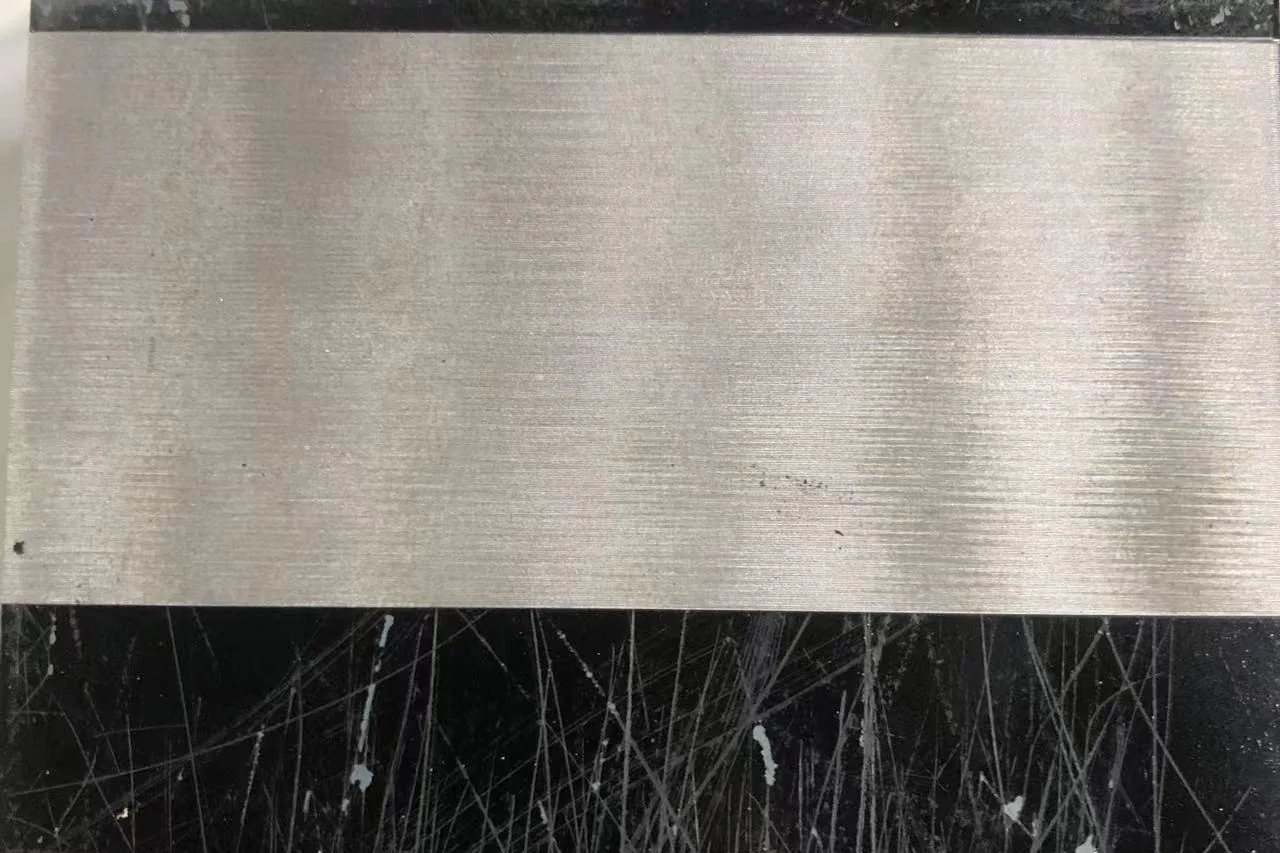
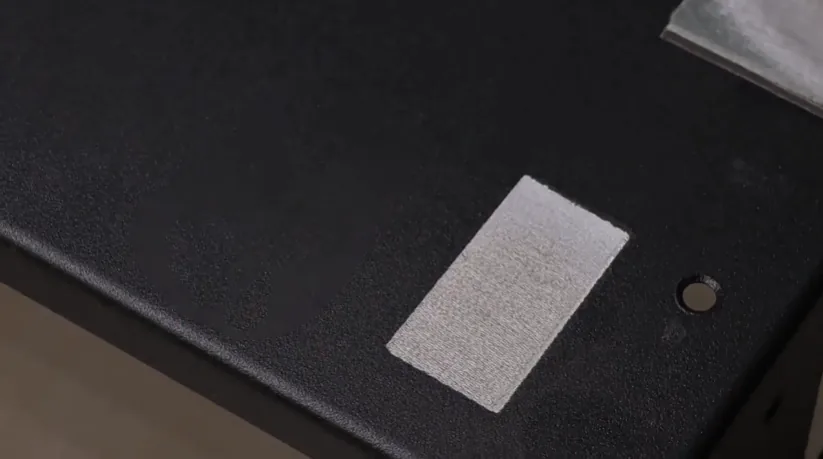
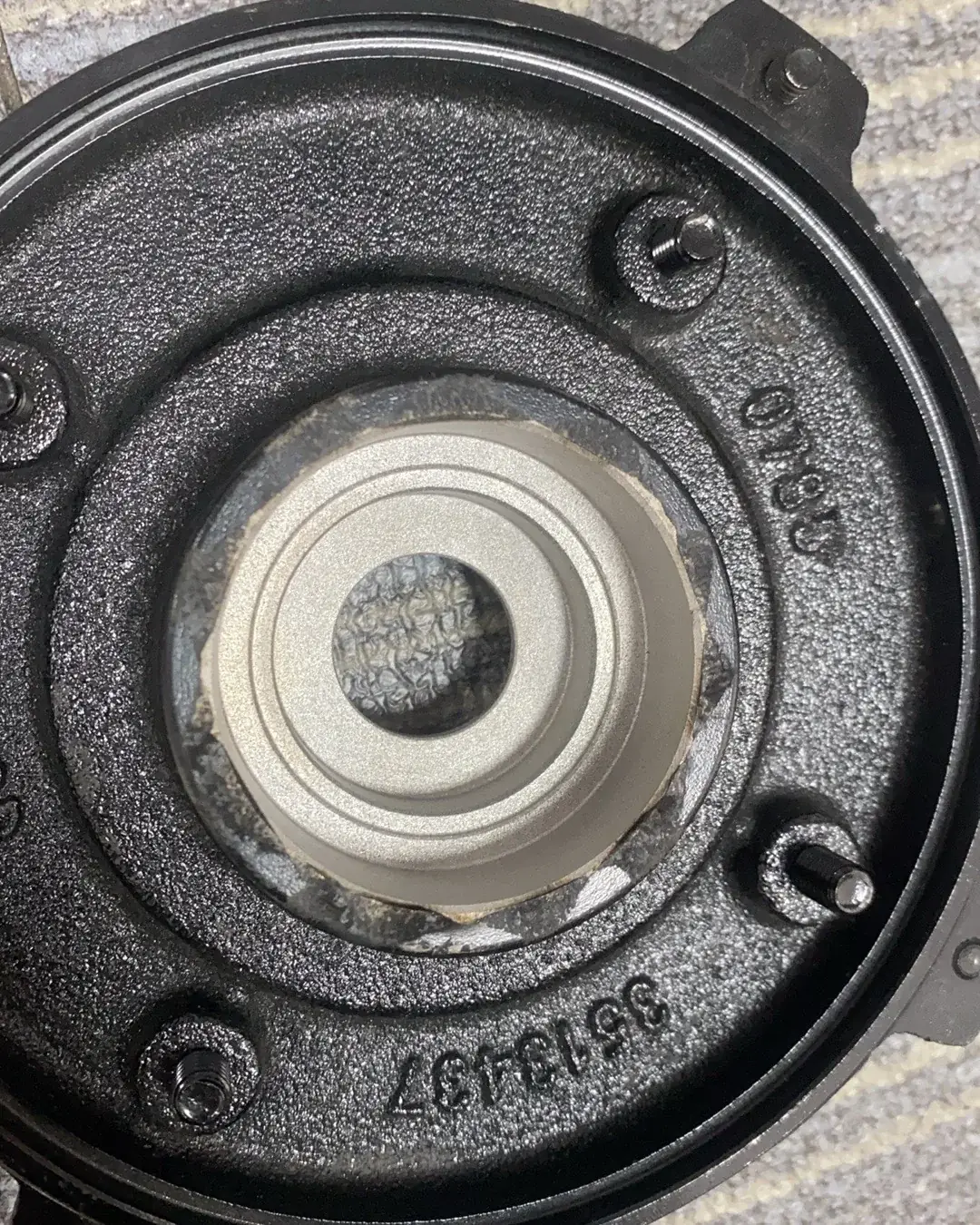
BeforeAfterCoating stripped from a cast housing bore
Laser Coating Removal: Strip Paint Without Media, Solvents or Disc Wear
MAXWAVE supplies laser paint removal machines for coating rework, pre-treatment before repainting and refurbishment of steel parts, structures and equipment. No blast media to contain, no solvent to dispose of, no abrasive discs to replace.
Two things decide the machine: the coating on the part, and what is underneath it.
Laser Paint Stripping: Pulsed on Thin Sheet, Continuous on Thick Plate
The steel under the paint picks the line: sheet below 4 mm goes pulsed, thick plate and structures go continuous.
BeforeAfter
Pulsed: MW-LY air-cooled cabinet, 100 to 500 W
Painted covers, guards, housings, panels and cabinet doors are usually sheet thinner than 4 mm. Continuous-laser paint removal may distort it; a pulsed source keeps heat input low, so the panel comes off flat, still refits and goes to repainting without straightening.
Rate
About 5 to 8 m²/h at 100 to 200 W on paint and primer; a typical 500 W unit runs about 6 to 8 m²/h on sheet. LY400 and LY500 carry wider scan fields for steady daily stripping.
Settings
Power 0 to 100%, frequency from 1 kHz up to 3000 or 4000 kHz by model, saved on the machine for the next batch. A single-mode source strips faster; multimode leaves the least mark on the substrate.
Large areas
A large area of thin sheet stays pulsed work. We size the pulsed power to the square meters you strip per day.
On site
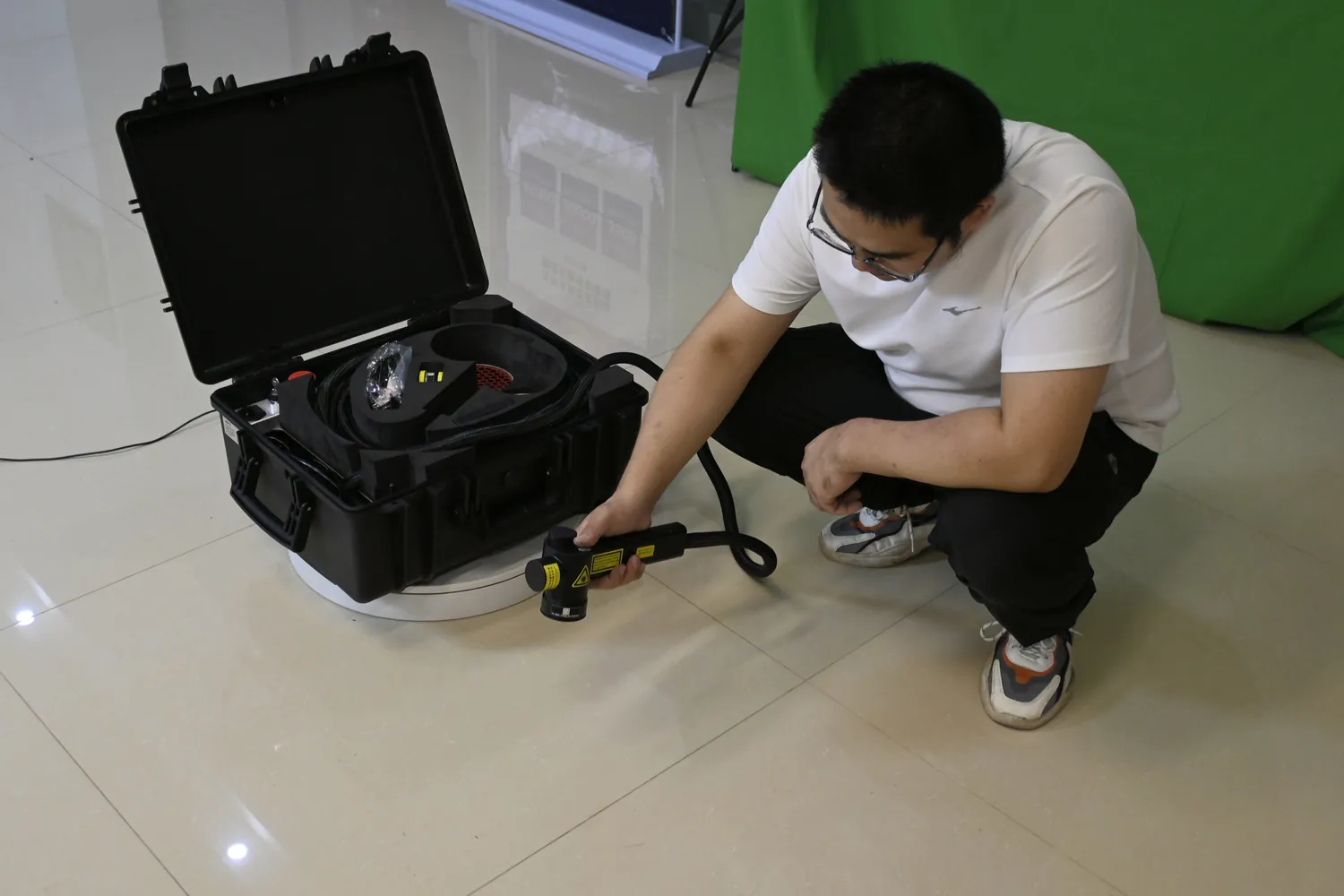
MW-LC trolley case, about 5 to 8 m²/h at 100 to 200 W; MW-LC50 backpack, about 4 to 8 m²/h at 50 to 200 W.
Continuous: MW-LCW water-cooled cabinet, 1500 to 6000 W
Continuous is right when the steel is thick, the painted area is large and stripping runs through the shift. Thick plate, beams, frames and heavy sections spread the heat through their mass, so the part stays as it was while the coating comes off.
Rate
About 10 to 20 m²/h on paint and coatings.
Cooling
A water chiller keeps the source cool over a full shift of stripping; power stability is below 1.5%.
Settings
Six cleaning modes. Settings for each coating and plate go into the process library, so next week's batch calls them up instead of finding them again.
Mixed parts
Thick frames and thin covers from the same job split: frames to the continuous line, covers to pulsed.
From our machine data sheets, approximate. Coating, thickness, substrate and settings move them, so they rank the lines rather than predict your part.
Machine line
Power
Paint and coating rate
01020 m²/h
MW-LY air-cooled pulsed
100 to 200 W
about 5 to 8 m²/h
MW-LY pulsed, typical on sheet
500 W
about 6 to 8 m²/h
MW-LCW water-cooled continuous
1500 to 6000 W
about 10 to 20 m²/h
MW-LC trolley case
100 to 200 W
about 5 to 8 m²/h
MW-LC50 backpack
50 to 200 W
about 4 to 8 m²/h
Swipe the table sideways to see the scale.
Laser Coating Removal on Wood and Stone
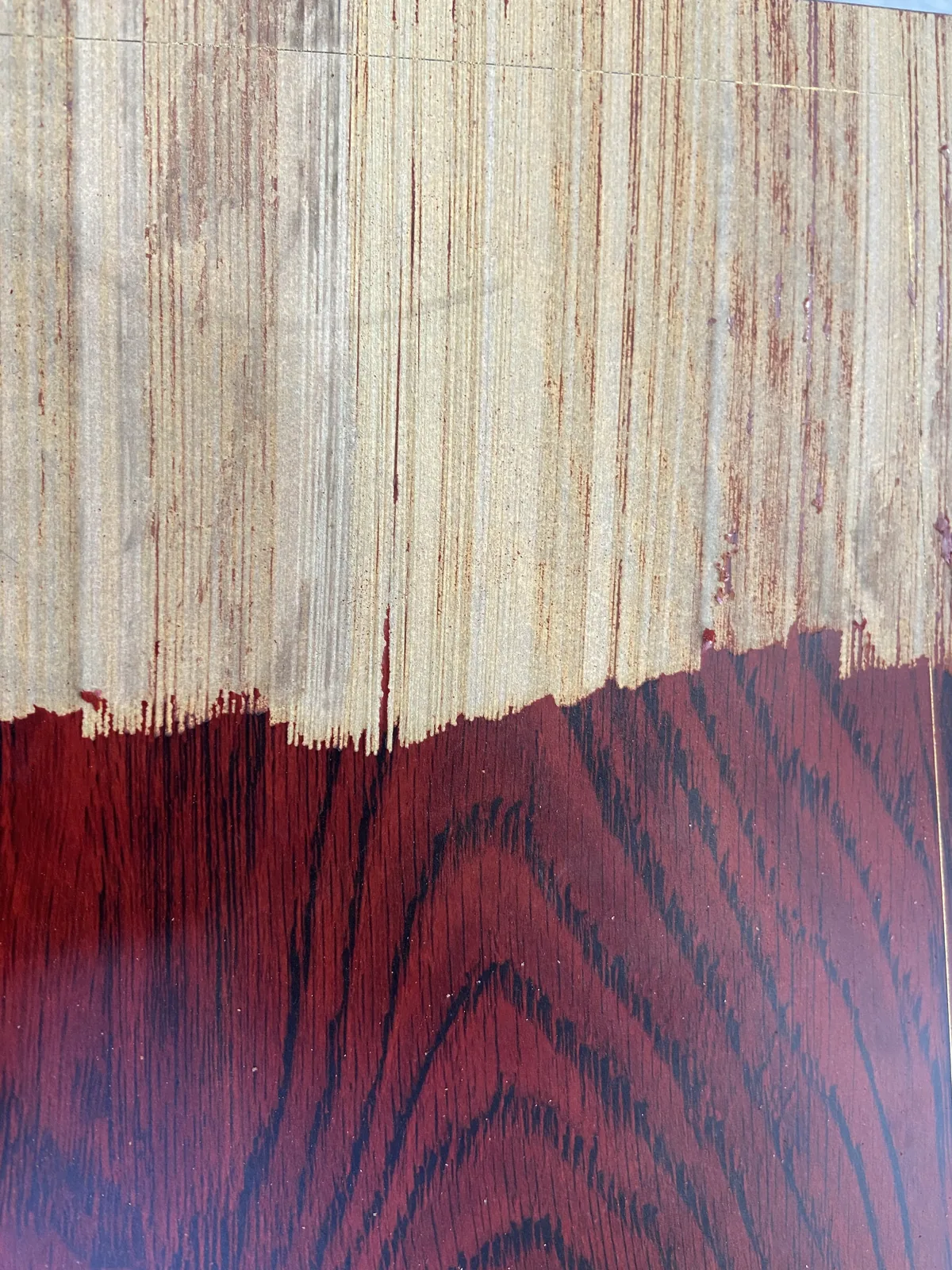
Both cabinet lines, MW-LY pulsed and MW-LCW continuous, are listed for wood, stone and building surfaces. The beam lifts the coating or dirt layer and leaves the grain or the stone face.
AfterBefore
Wood
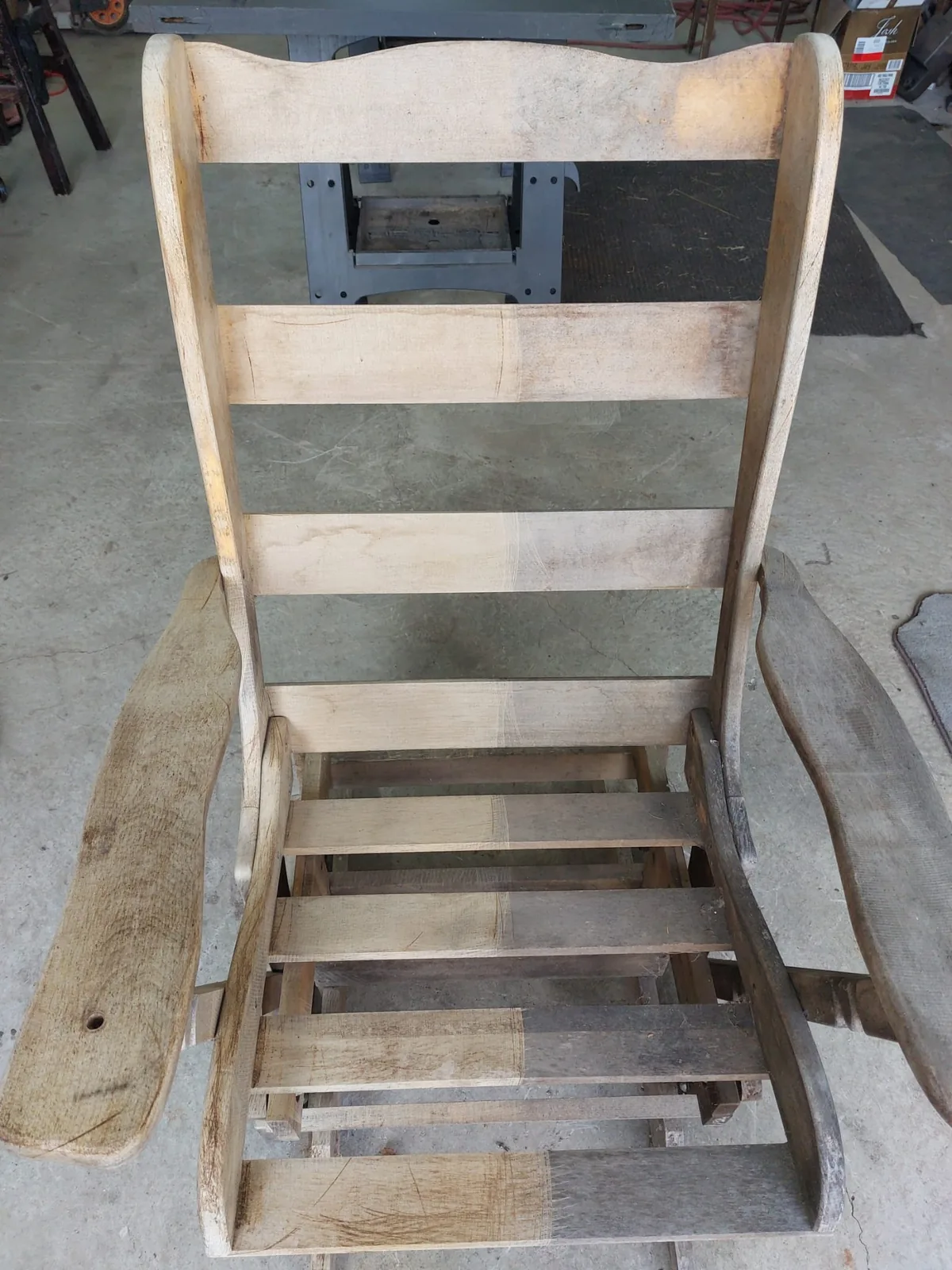
Wood can show color differences after cleaning. Our engineers' fix is a slightly higher frequency than on metal, proved on a patch before the whole piece.
Test patch, every wooden piece
Run a small patch first, at a slightly higher frequency than for metal.
Check the patch for color differences against the wood around it.
Adjust the frequency until the color matches, then clean the whole piece at those settings.
Weathered slats beside laser cleaned wood on one chair
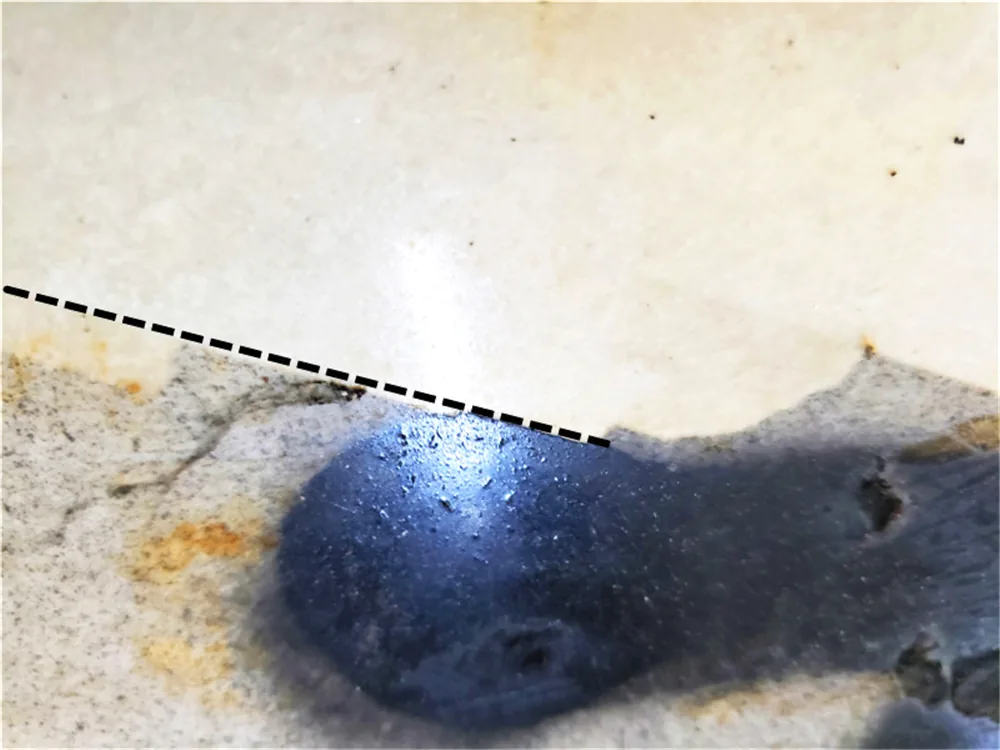
Marble slab: stain cleaned off up to the marked line
Stone and building surfaces
Detailed stone and restoration pieces:MW-LY pulsed.
Larger building surfaces:MW-LCW continuous.
Settings per stone type: one stone's power and frequency are not a starting point for the next.
Patch on the actual stone: shows whether it keeps its own color and surface texture before the whole surface is cleaned.
For wood and stone we recommend one of the two cabinet lines; the MW-LC trolley case and MW-LC50 backpack are sized for thin layers on metal. More before-and-after photos: laser cleaning results
Selective Coating Removal on Marked Areas
A double-swing head scans in 2D patterns shaped to the area: the coating inside the pattern comes off, the coating around it stays.
AfterBefore
Double-swing: the 2D pattern takes the shape of the marked area.Single-swing: the beam moves along one line only, so a clean, even edge around the area can take several passes.
Weld areas
Coating taken off the joint zone before welding; the paint on the rest of the part is kept.
Grounding and contact points
A bare metal spot opened in a painted surface for an electrical connection.
Local repair
Damaged or flaking paint taken back to the substrate on one patch, ahead of a touch-up coat.
For selective work we specify the double-swing head.
Paint, Powder Coating, Primer and Coating Residue
The beam removes organic layers. Thickness and bond decide the number of passes.
Paint
Powder coating
Primer
Old coating residue in corners and edges
Single thin filmfewest passes
Thick or multi-layer systemmore passes, more beam time
Coating bonded hardmore passes than a thin film
The reference rates above cover paint and coatings in general. For your coating, our engineer recommends the line and power from your photos and the coating details you send.
Heavy multi-layer systems on thick plate, stripped through the shift:MW-LCW.
A very thick coating on thin sheet: our engineer reviews your photos before naming a configuration.
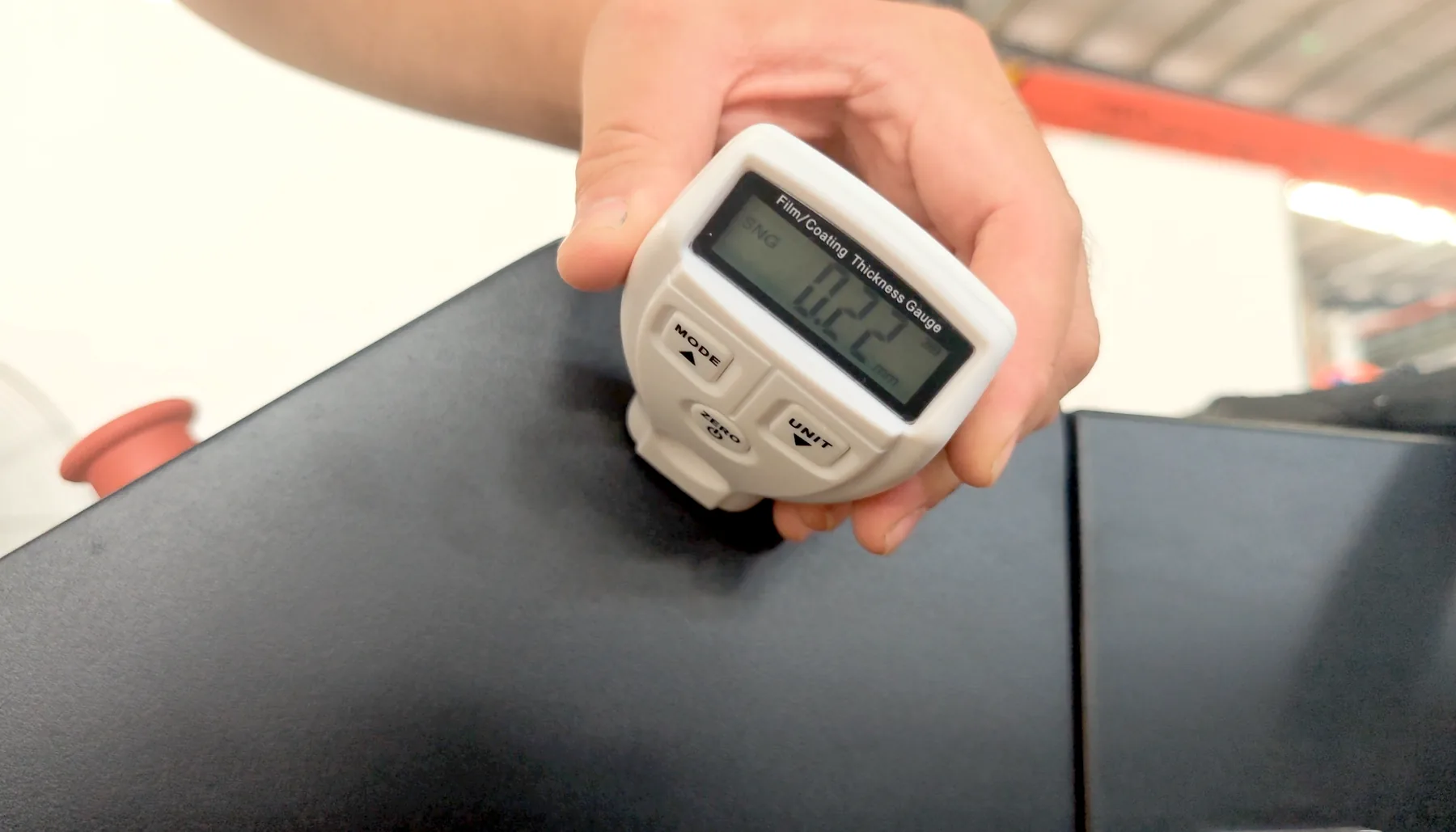
Coating thickness reading on a painted steel panel
Surface After Stripping and the Recoating Step
The part leaves the machine with the coating gone and the substrate showing, ready to move on to inspection and recoating.
AfterBefore
Off the machineNo blast grit in the surface and no chemical stripper to rinse off before the part moves on.
Recoat soonBare steel in air and moisture starts to oxidize again, so the new coat goes on soon after stripping.
Anchor profileLaser stripping does not roughen the substrate. If the new system is specified over a blasted anchor profile, blasting stays in your process after the laser.
Typical Coated Parts
Five part groups and the line each one goes to.
Sheet-metal housings, covers and guards
Paint and primer stripped from thin panels before repainting.MW-LY
Machinery under repair
Paint taken off housings and frames during overhaul, at the machine.MW-LC trolley case
Painted plate and steel structures
Coating systems removed from beams, frames and heavy plate before recoating or inspection.MW-LCW
Wooden pieces and stone surfaces
Coatings and surface layers cleaned on a cabinet line, after a small test area.Wood and stone settings
Wheels and hubs
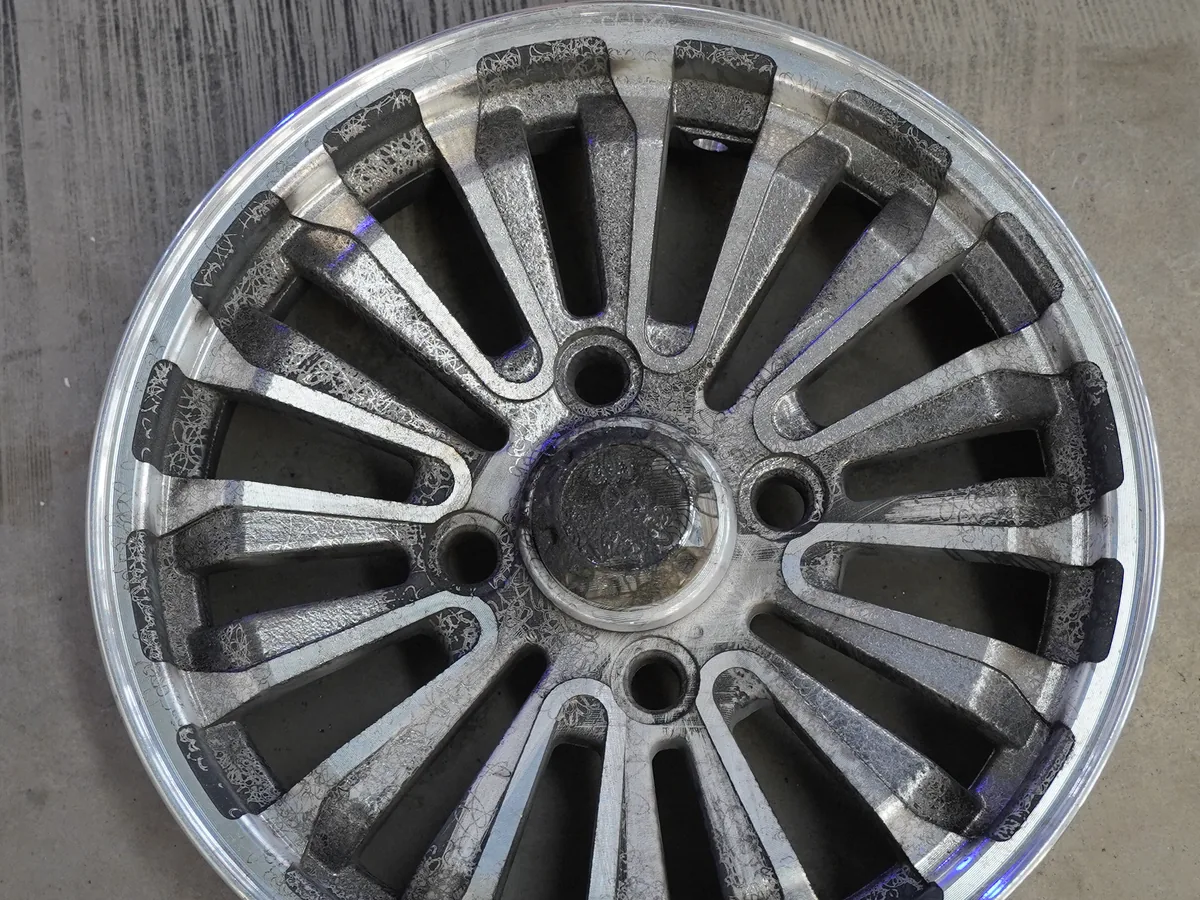
Paint removed from hubs before refinishing, at a repair bay.MW-LC trolley case
Blasting, Chemical Strippers and Fume Extraction
What the laser changes around the part, and what it still needs at the cleaning point.
Laser stripping against blasting and chemicals
Blasting and chemical strippers
Media or chemicals to buy, apply and dispose of, with the waste contained around the part.
Laser
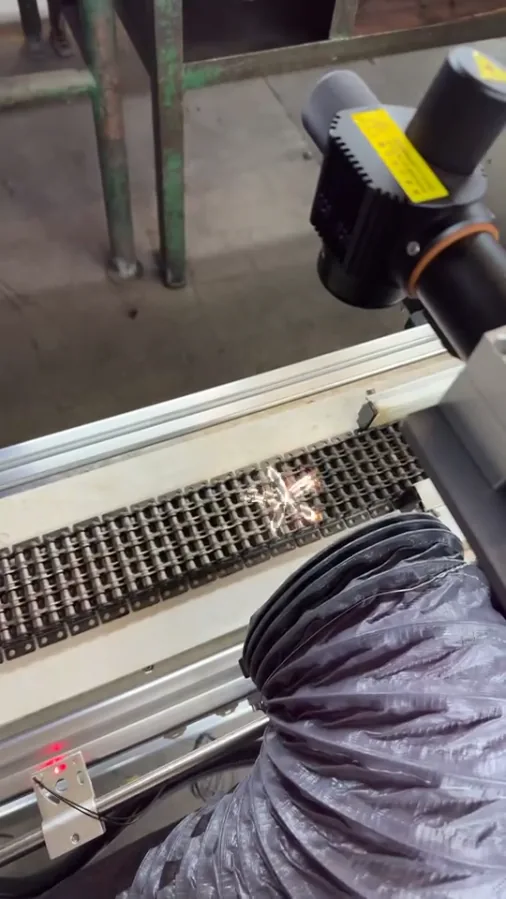
Electricity and the beam strip the same coating; the removed coating goes to the fume extractor.
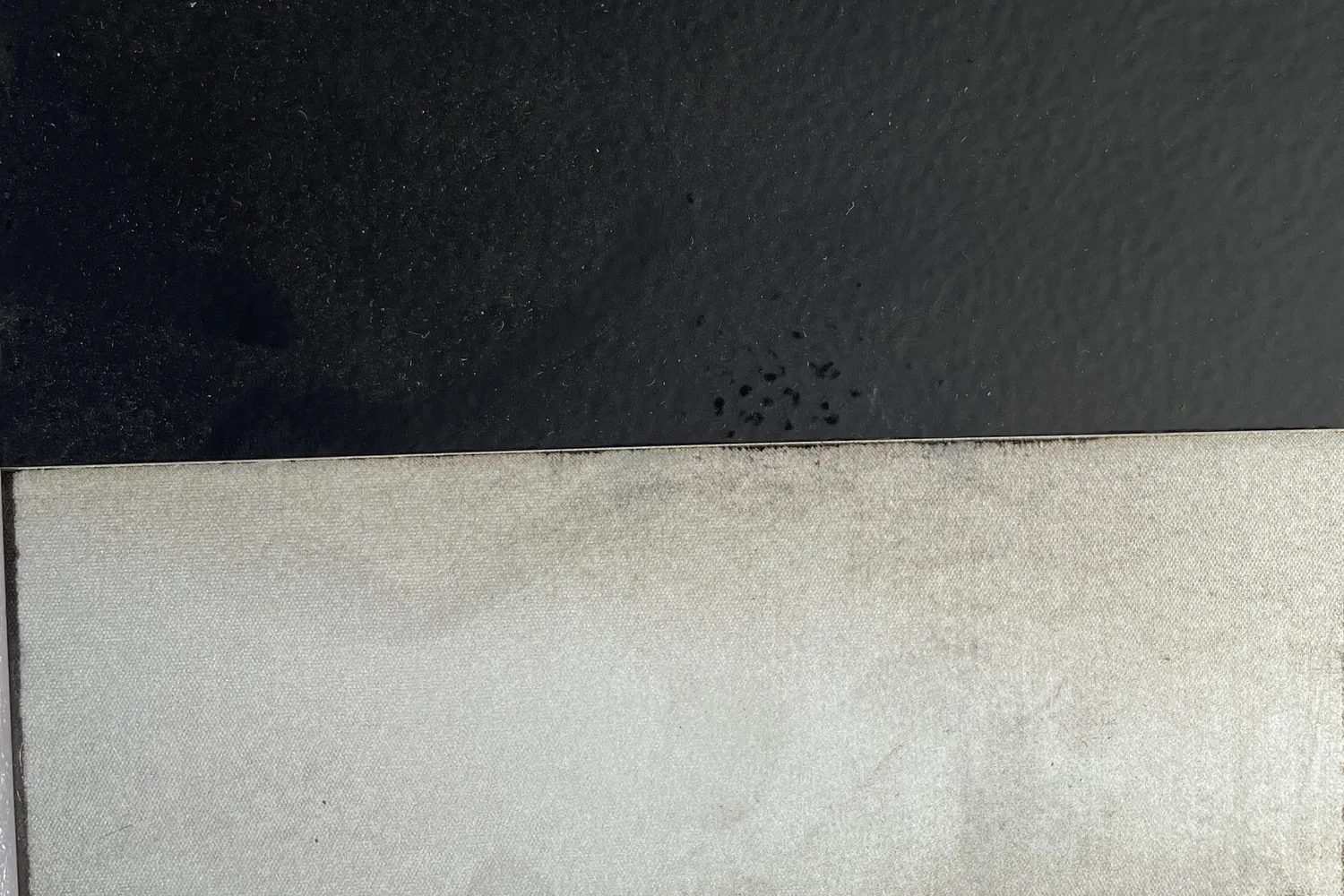 BeforeAfter