1You
Requirement
Describe the part, the layer to remove and where cleaning sits in your process.
MAXWAVE builds custom laser cleaning systems for parts and production lines that do not suit a standard machine, for engineers at fabrication plants, rail workshops and other manufacturers that need automated laser cleaning at one step of their process.
A handheld laser cleaner leaves positioning and pacing to the operator. A custom system builds both into the machine: the head is held in a defined position, the motion follows a programmed path, and the laser output is set for your material and the layer you remove.
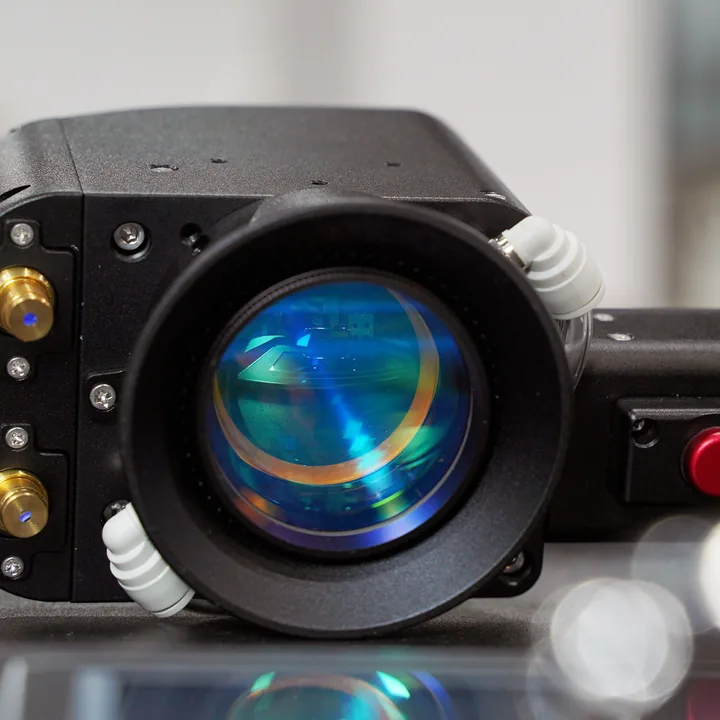
System outlineMAXWAVE
Both projects were built on laser sources, cleaning heads and electrical systems from our standard range: components we already assemble and test.
A custom project changes how the laser reaches the surface, not where the core components come from.
One of these four usually rules out a standard machine:
A self-propelled robot paired with a MAXWAVE laser cleaning machine. The robot carries and moves the cleaning head; the laser machine supplies the beam and the cleaning parameters.
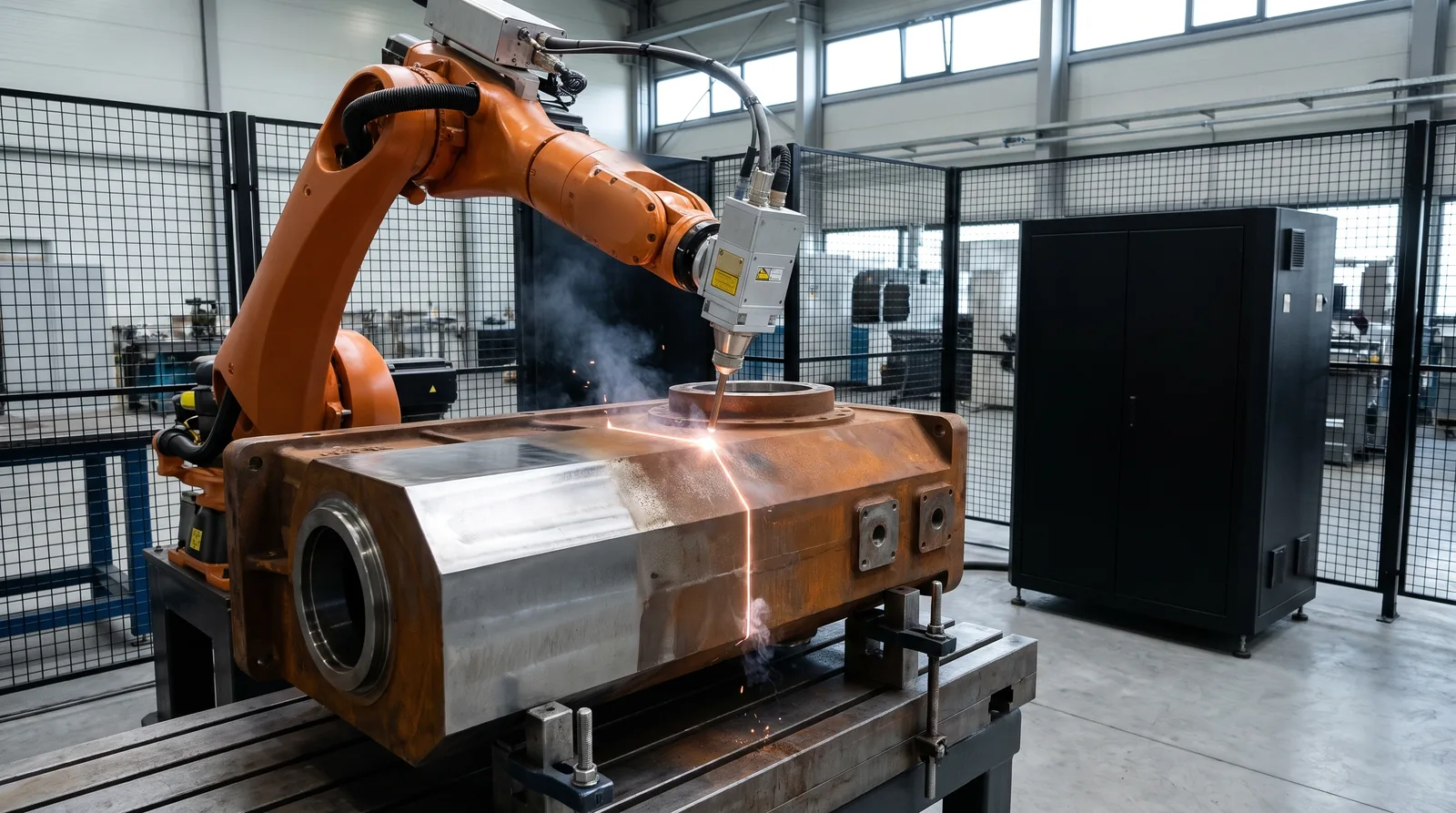
The head is mounted so the robot carries it at the working distance the optics need, with fiber and cables routed to move with the robot without strain. Control signals are connected so the robot starts and stops light output at the right moment.
The robot's path decides how evenly the steel is cleaned. Travel speed, line spacing and the order of passes are set so each area gets the same exposure, with laser on and off tied to the robot's position along the path.
Problems that appeared when robot and laser ran together were worked through and resolved at this stage, before final tuning.
Laser parameters and robot motion were tuned together on the assembled system until the cleaning result on steel was consistent along the whole path.
Brackets, mounts and machine structure were adapted so the head holds its position during travel and the system fits the space where it works.
What this means for your projectIf you already run a robot, or plan to add one, the integration work is in mounting, signal connection, path and parameter tuning. We plan these stages into a robot laser cleaning project from the start.
Railway wheels are heavy, round and too big for a handheld operator to clean evenly around their full surface. This dedicated system ran through six stages.
A fixed mounting relative to the wheel keeps the working distance and the angle to the surface the same while the wheel passes under the beam.
The standard modules were reorganized into a fixed station built around a wheel, instead of a cabinet an operator walks beside.
On a large curved part, small motion errors show up as uneven cleaning. Motion control was refined to keep head and surface aligned through the full cycle.
Laser parameters and motion settings were tuned together on the finished system for the wheel's material and the layer being removed.
Problems that appeared when the full system ran on a wheel were worked through and resolved at this stage.
The frame and supporting structure were adapted to carry the head at the fixed position and suit the size and weight of the wheels.
What this means for your projectFor a large or heavy part, we design the station around the part, with fixed head positions and controlled motion, so cleaning quality comes from the machine setup instead of operator handling.
Directions we have developed beyond the standard machines, each for a specific production need.
Whether a custom system starts from a pulsed or a continuous laser follows the same rules as for standard machines, explained on our pulsed vs continuous laser cleaning page.
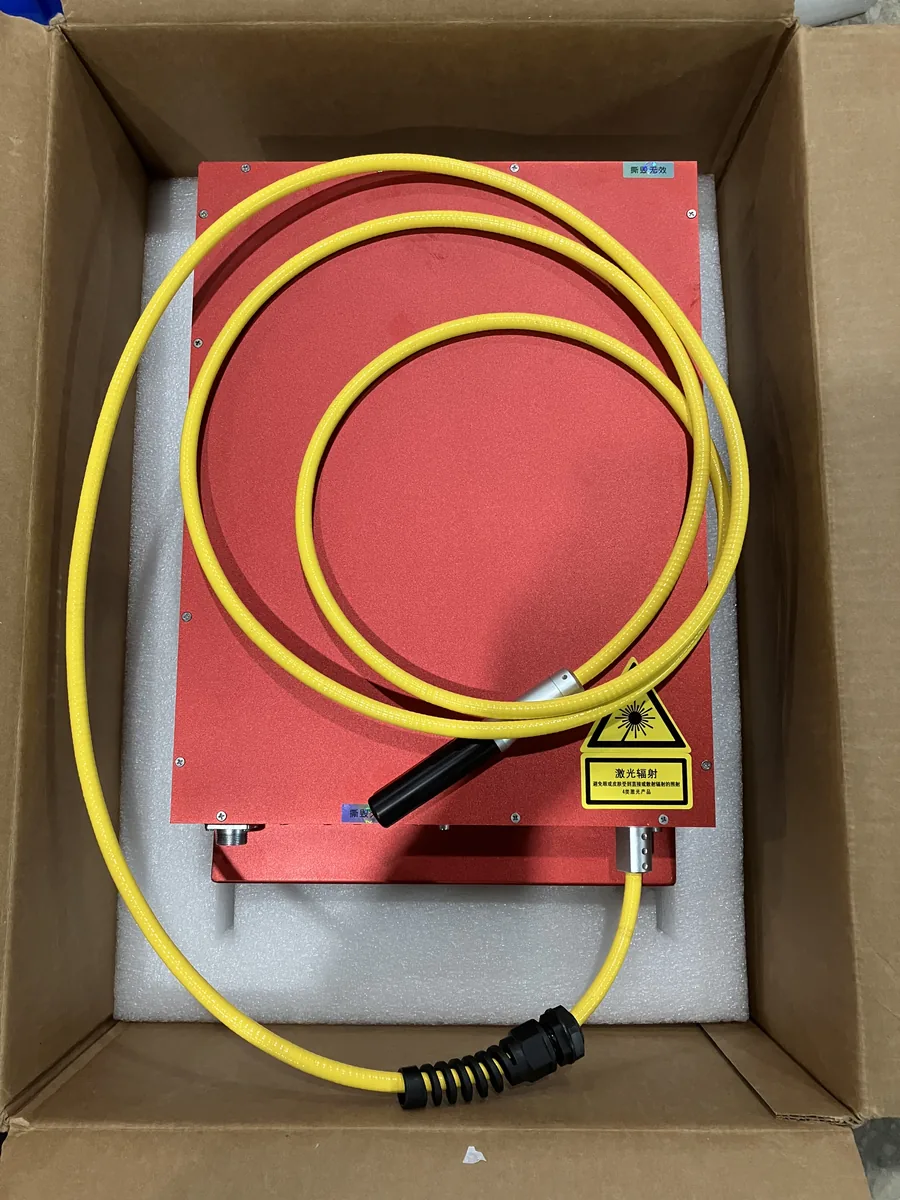
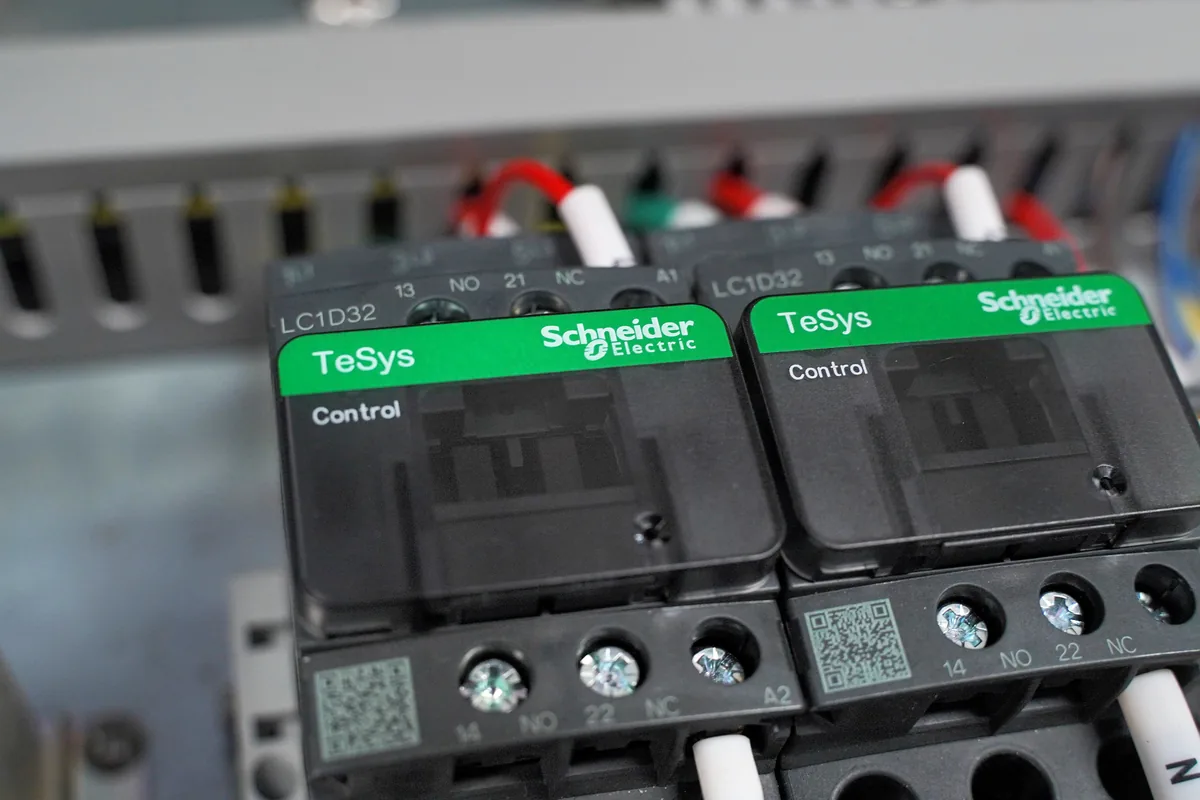
The same core components as our MW-LY pulsed and MW-LCW continuous machines.
Spare parts and troubleshooting come from the same parts and the same engineers that support our standard range, and your system has its own equipment record.
How we build, test and inspect every machine: About Us.
Send a drawing or photos of the part, the layer to remove and where cleaning sits in your process.
Six steps in one line. The tag on each step shows who acts: you, or our engineers.
1You
Describe the part, the layer to remove and where cleaning sits in your process.
2You
Drawings, dimensions and photos of the part and the contaminated surface. Full list.
3MAXWAVE
Laser type and power, head arrangement, motion, and how the system connects to your equipment.
4MAXWAVE
We build the system, install the electrical system, configure the software and commission motion and laser together.
5MAXWAVE, you watch
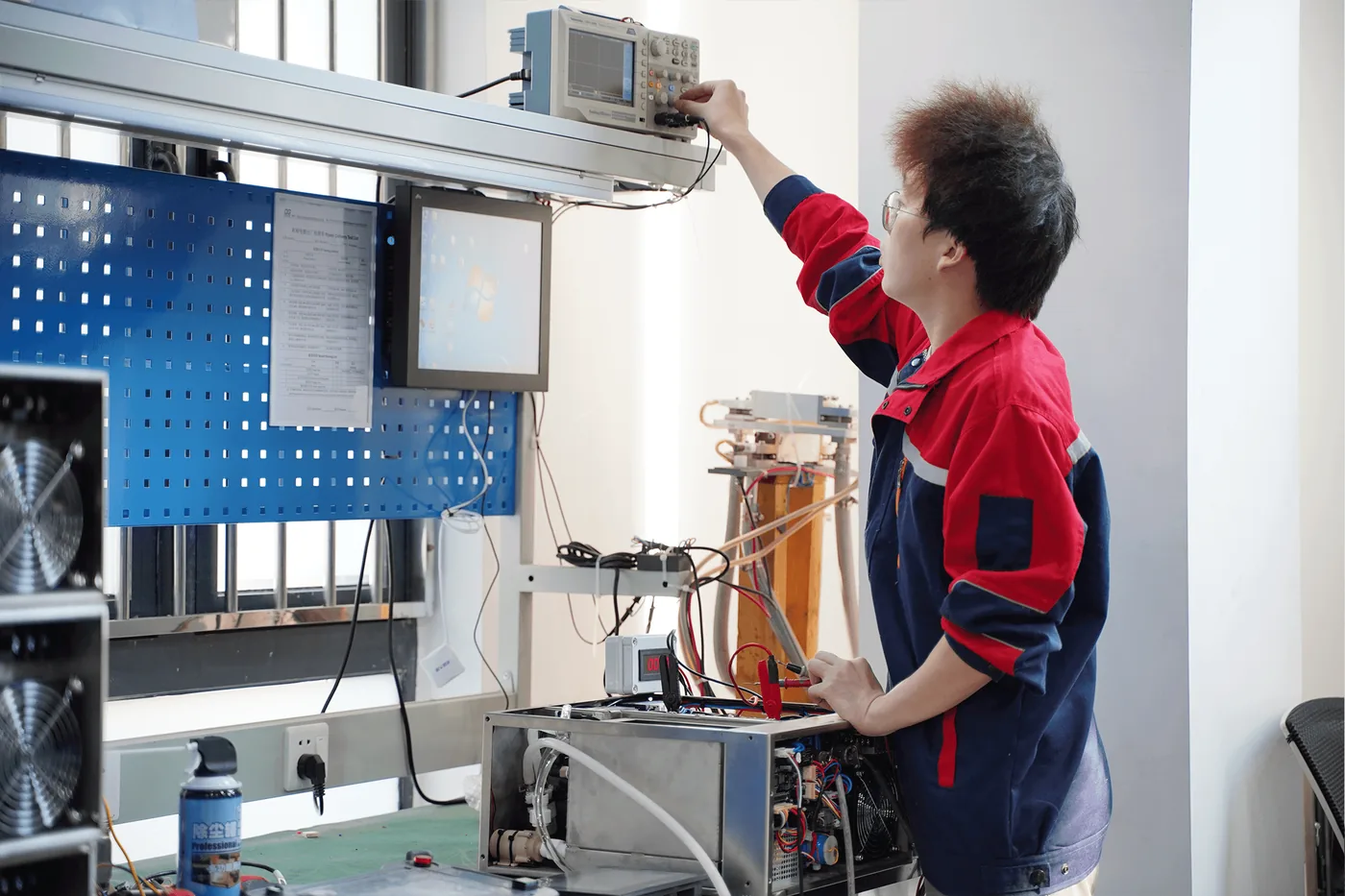
On top of our standard final tests, an exclusive inspection of the functions built for your project. You can watch it by remote video inspection before shipment.
6MAXWAVE
Packed for export with its documentation; our engineers support installation and start-up remotely.
Timeline: it depends on the scope of each project, and we set it with you once the system proposal is agreed.
Step 5 is where the functions built for your project are proven: they are inspected on top of the final tests every machine passes, and you can follow the inspection by video before the system ships.
The more of this you send at the start, the more specific our first system outline is.
Send it through the form below, or share drawings and photos on WhatsApp.
A custom system runs a Class 4 laser like our standard machines. The station is planned with two things built in.
Laser safety, extraction and operator training are covered on our support and maintenance page.
Many cleaning tasks inside a plant are handled by a standard machine with your own fixture holding the part.
A standard pulsed or continuous unit is the simpler choice when:
The four standard lines are compared on our laser cleaning equipment page.
Tell us about your part and your line, and an engineer replies with a first outline for a custom system, or with the standard machine that already fits.
Phone / WhatsApp: +86 15327155363 · Call
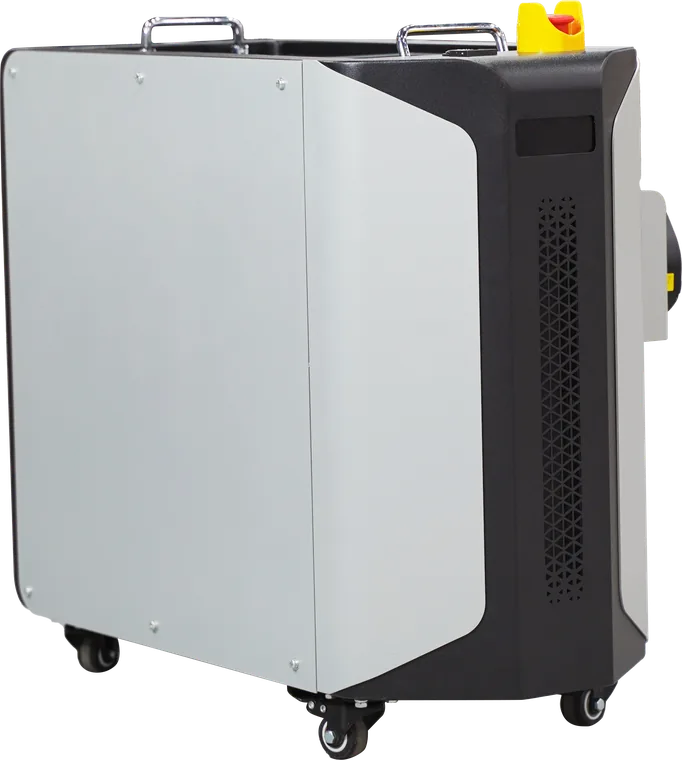 MW-LY
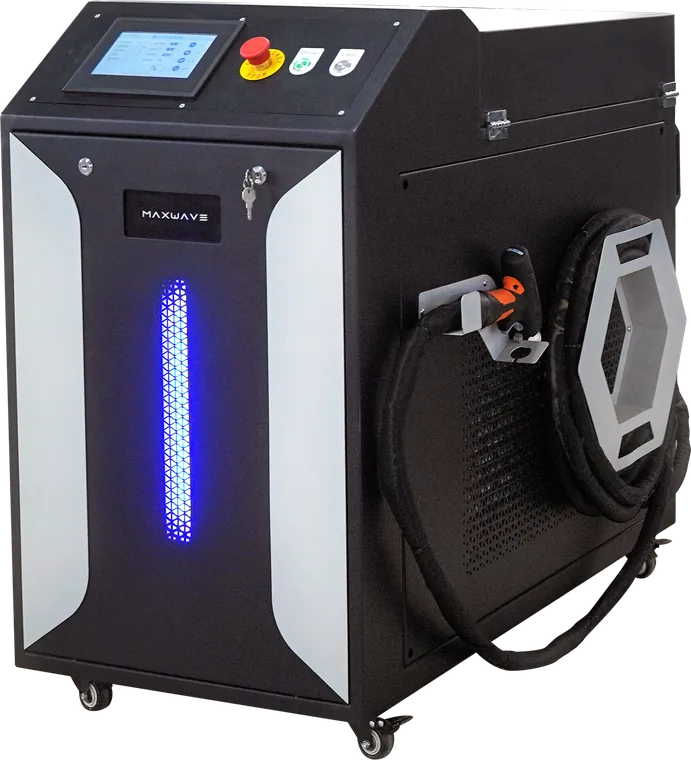 MW-LCW
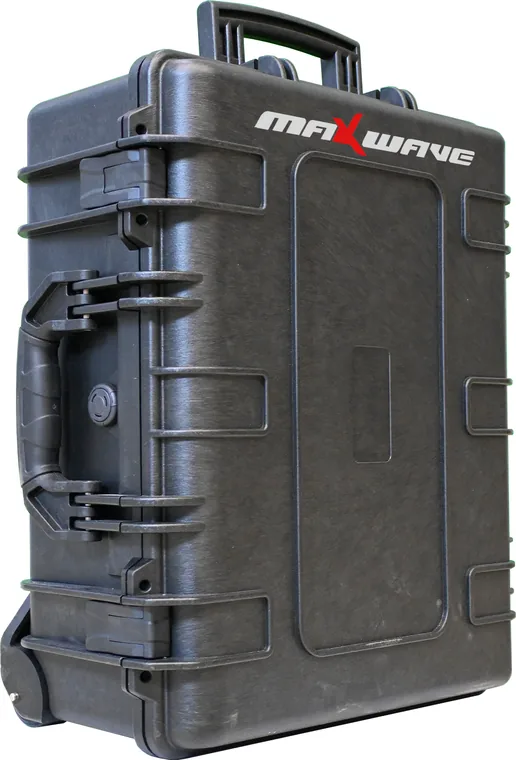 MW-LC
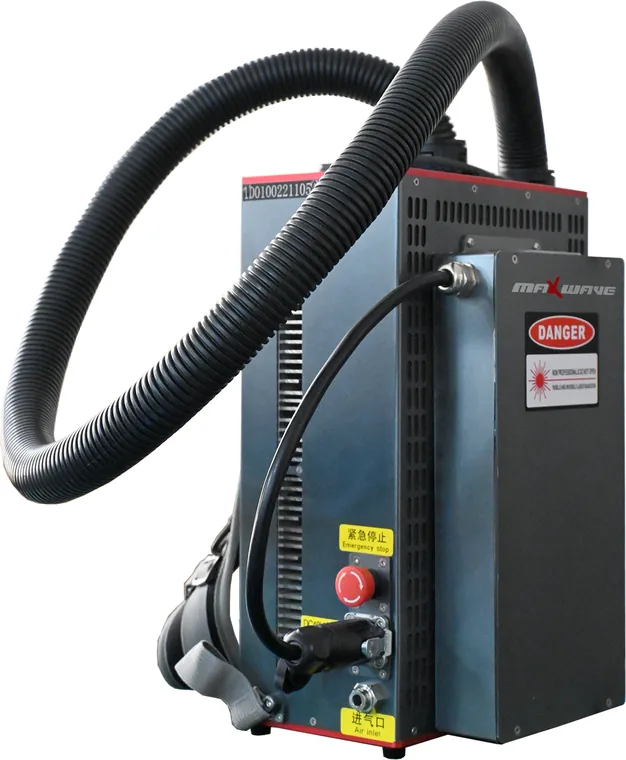 MW-LC50